《海海臺東.南島誌》2025年雙語選輯 :::
英文原文Writer|Dana Huang 中文翻譯Translator|Dana Huang 圖Photographer|林庭宇 Ting-Yu Lin、Vilsoni Hereniko
原文出處|《海海臺東.南島誌》Vol. 5,2025年11月號羅圖馬劇作家Vilsoni Hereniko
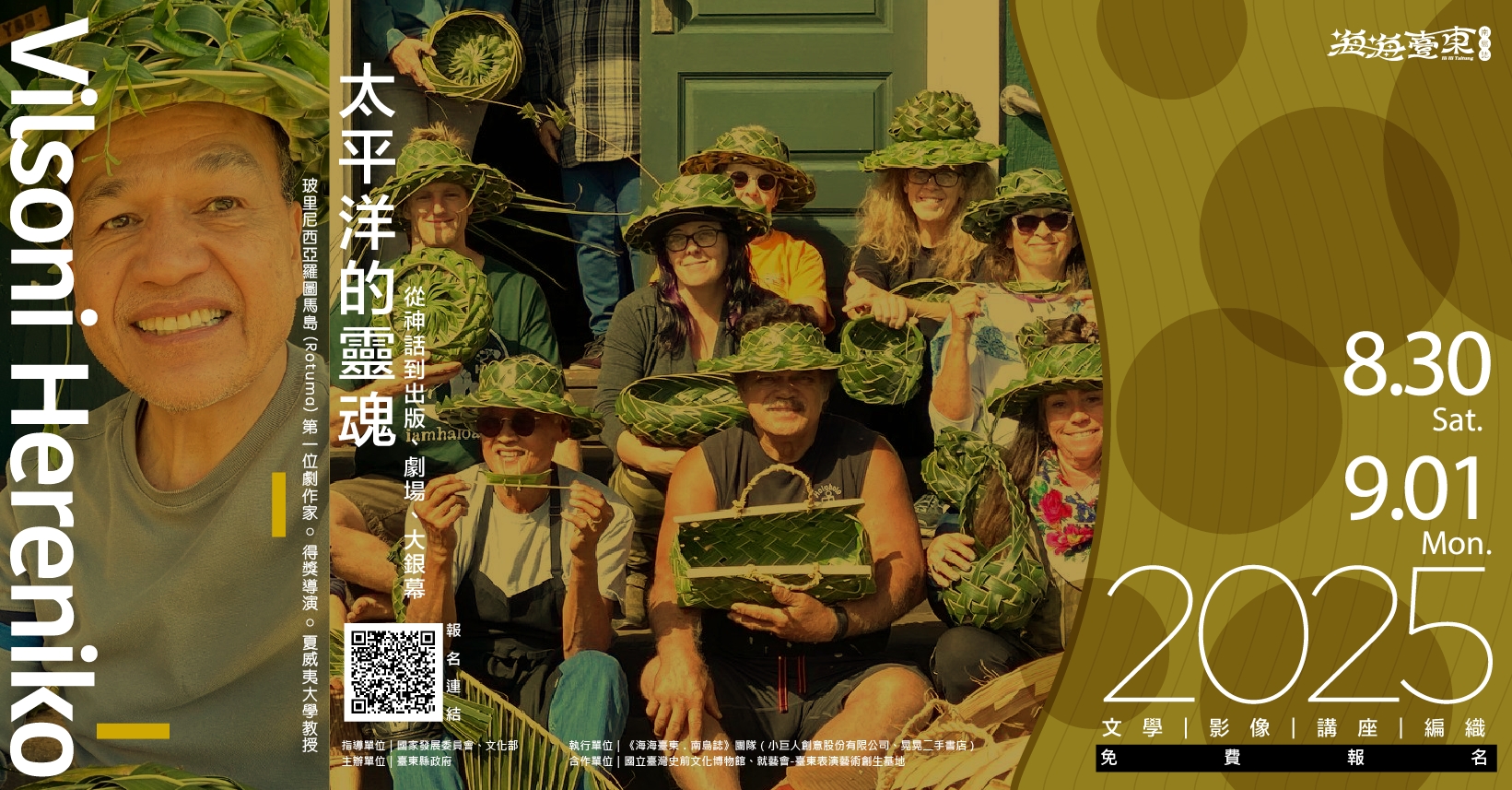
Vilsoni Hereniko,來自於羅圖馬 —— 一座位於斐濟以北289 英里、人口約2,500 的小島。為羅圖馬島也是斐濟第一位、目前仍是唯一的劇作家、獲國際獎項的電影編劇和導演,也是太平洋文學研究知名學者。現任夏威夷大學馬諾阿分校電影藝術學院教授,專注於劇本創作、原住民影視美學和電影製作。
About Vilsoni Hereniko
Dr. Vilsoni Hereniko is a renowned Rotuman playwright, academic, filmmaker, and award-winning coconut leaf basket weaver. He is currently a professor at the University of Hawai‘i at Mānoa where he teaches screenwriting, indigenous aesthetics, and film production. He was a cultural consultant for Disney’s animated feature film Moana.
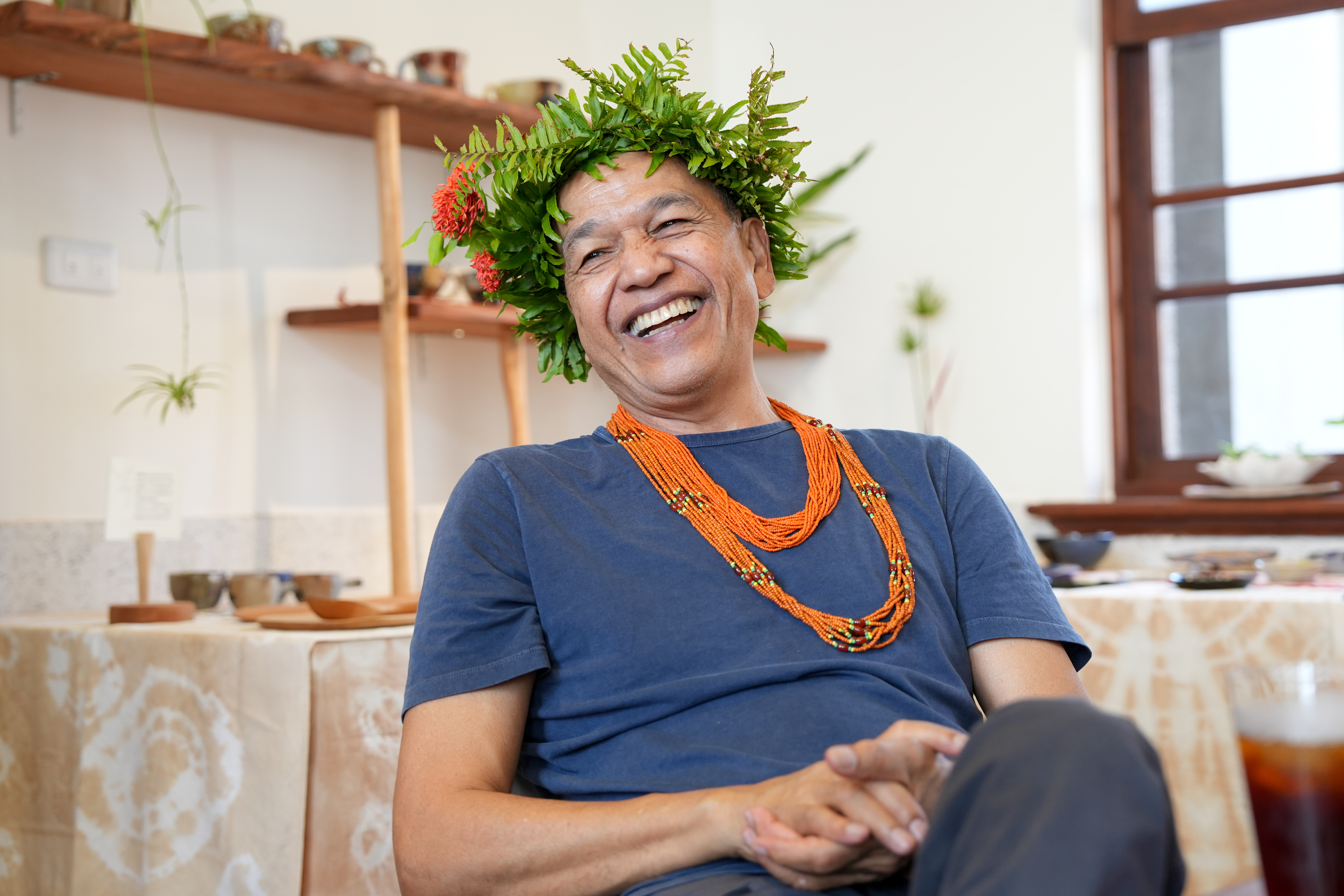
Vilsoni Hereniko
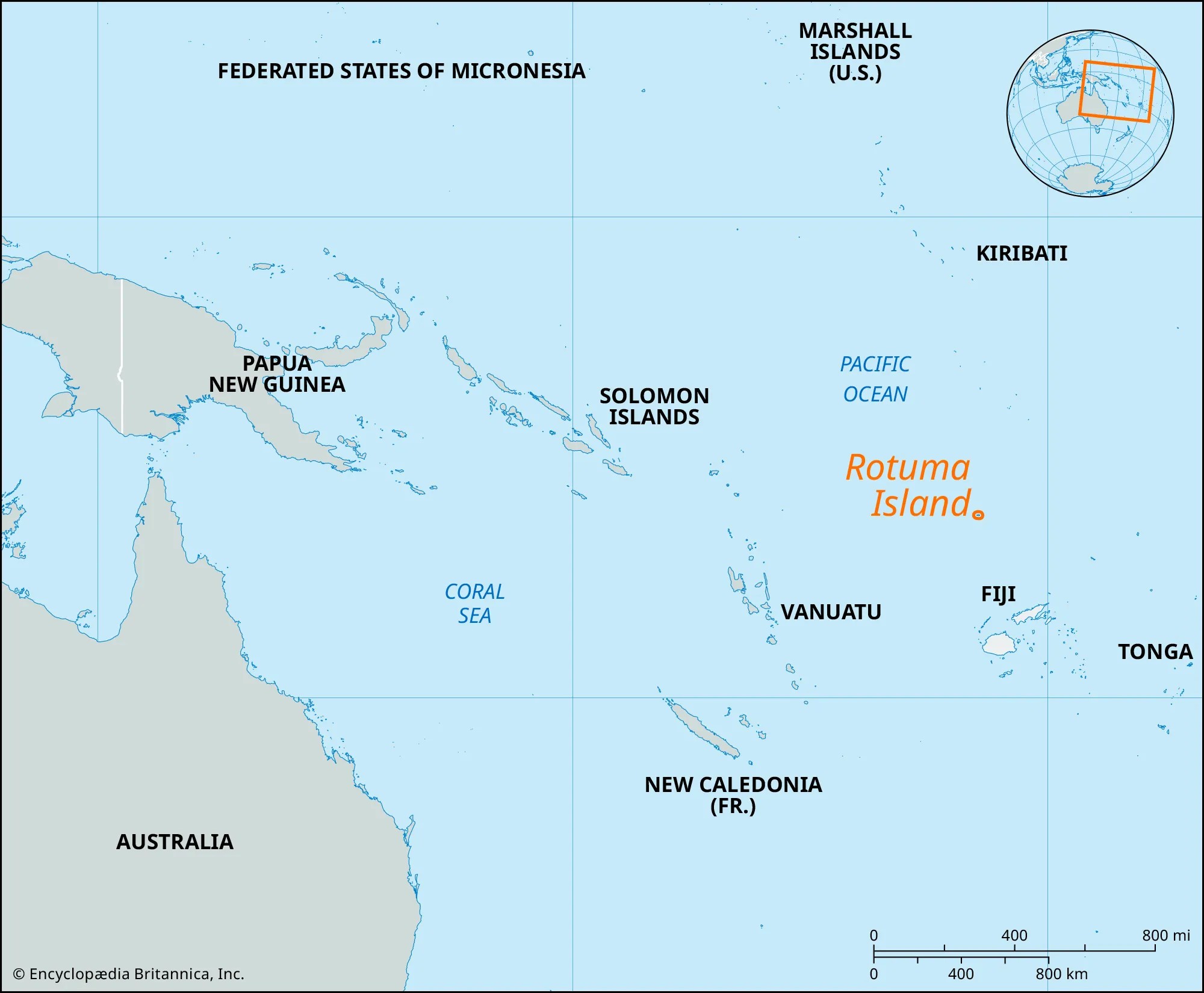
Rotuma Island (resource: Encyclopaedia Britannica)
流動的大洋敘事
「我從未想過這趟臺東之行會帶給我如此大的震撼。來到這裡,我感覺自己回家了。」眼前這位70 歲的Vilsoni Hereniko(以下簡稱Vili),一邊吃著小米阿粨,一邊望向我們緩緩說道。 雖然首度見面,他卻令人毫無距離感;很快地,我便知道他特別愛吃魚,因為在其成長過程中,魚是餐桌上罕見的奢侈品。愛大笑的他說幽默是羅圖馬人與生俱來的特質。他對椰子懷有深厚的情感,不僅在物資匱乏時,是果腹的依靠;在神話傳說中,椰子亦是靈性象徵。因為愛說故事而熱愛電影創作,電影是他的工具――用來承載族群的故事,也讓更多人重新感受人和土地、萬物之間的溫度與連結。
The Soul of Oceania in Motion
“I never imagined that this trip to Taitung (1) would move me so deeply. Being here, I feel as though I’ve come home,” said Vili, his eyes soft with emotion as he took a bite of a-bai (阿粨), a local steamed millet delicacy, before looking up at us with an infectious smile. This trip was the first time I met Vili in person, after having a few conversations over Zoom prior to our arrival. Yet he carried no trace of distance. I quickly discovered that he loves eating fish, a fondness that stems from growing up near the ocean on an island. I would catch his laughter tumbling out in waves, bubbling up like a sudden splash of sunshine. He said humour and storytelling lived in the very bones of the people of Rotuma. It is this passion for storytelling that drew him to filmmaking later in his life. For Vili, cinema is a metamorphic vessel - one that can carry the stories of his people, bridge past and present, and traverse relationships between humans, the land, and all living things. *(1) Taitung County is located on the southeast coast of Taiwan.
讓山脈訴說vā 的浩瀚
在大師講座《太平洋的靈魂:從神話到出版、劇場、大銀幕》中,Vili 提到,大洋洲的靈魂在於「關係的流動」,即薩摩亞文化中的vā (2) ――一種牽繫人、土地、海洋、祖先與生命萬物的深層隱喻。vā 將遼闊的太平洋,從地理的分隔轉化為緊密的關係網絡,串聯起所有島嶼與生命。正因為大海的連結,我們便同屬一個生命共同體,也因此肩負守護這份彼此牽連的責任,Teu le vā (3) 。 短片《讓山脈訴說》(Let the Mountain Speak)(4) 以視覺詩歌的形式,向夏威夷島上的聖山冒納凱阿火山(Mauna Kea)致敬。影片結合長鏡頭與大自然環境音,讓觀眾聆聽山的呼吸,凝視大地的靜默,提醒人們珍惜與萬物之間的關係。透過帶領觀眾進入冒納凱阿火山的靜謐與神聖之中,開啟了影像與觀者之間的vā。 若說大洋洲的靈魂在於vā,那麼也意味著我們皆需承擔起互相關懷的責任――不僅對過去和現在,也對尙未誕生的子孫。從這樣的觀點出發,這部電影不僅再現冒納凱阿火山,更是實踐vā 的方式。Vili 將創作成為一種「容器」―― 一個能開啟對話與呼應的潛能空間,使影像與觀眾之間流動出一種浩瀚而共鳴的關聯。 *(2) vā 是薩摩亞語中的一個核心概念,它強調人與人、人與自然、人與社群之間的連結、尊重與和諧。可閱讀Vilsoni Hereniko的文章Activating the Vā: Performance, Academia and the Sublime以獲得更多認識。 The term vā focuses on the importance of sharing, giving, caring, and navigating space between people and their environment. Read more: Vilsoni Hereniko, “Activating the Vā: Performance, Academia and the Sublime,” Oceania (2024): 1-13. *(3) Teu le vā 意指「照顧彼此之間的關係空間」,可在此閱讀到更多資訊。Read more on Teu le vā, a Samoan/ Pasifika concept that means “to care for the space in-between”; the relationship. (For example, https://manawisetraining.com/topics/teu-le-va-2/)
THE VASTNESS OF VĀ: SEEING BEYOND THE SEEN
In his keynote presentation, "The Soul of the Pacific: Tracing Myths through Literature, Theatre, and Cinema”, Vili conceptualised the soul of Oceania as relationships, a notion expressed in Pacific cultures as vā, which refers to the relational space between and among all things. (2) It applies to all levels of being: between people, communities, ancestors, and the natural world. Vā transforms the vast Pacific Ocean from a barrier into an interconnected network of relationships that links all the islands. Because the ocean binds us together, we belong to one living community, and with that belonging comes a shared responsibility to nurture the space that connects. (3) Vili’s short film Let the Mountain Speak (4) is a visual poem that pays tribute to Mauna Kea, a sacred mountain on Hawai‘i island. Through contemplative long shots of natural landscapes and the interwoven sounds of wind and narration, he provides the audience with an opportunity for introspection. The delicate interplay between silence and sound brings an almost meditative effect, carrying a spiritual and metaphysical weight that underscores the controversy surrounding Mauna Kea. In this way, viewers are engaged at a deeper level, aligning with the film’s exploration of human intervention, existence, and the enduring relationships we share with land, mountains, animals, plants, and all forms of life. *(4) Let the Mountain Speak, written and directed by Vilsoni Hereniko (2017).
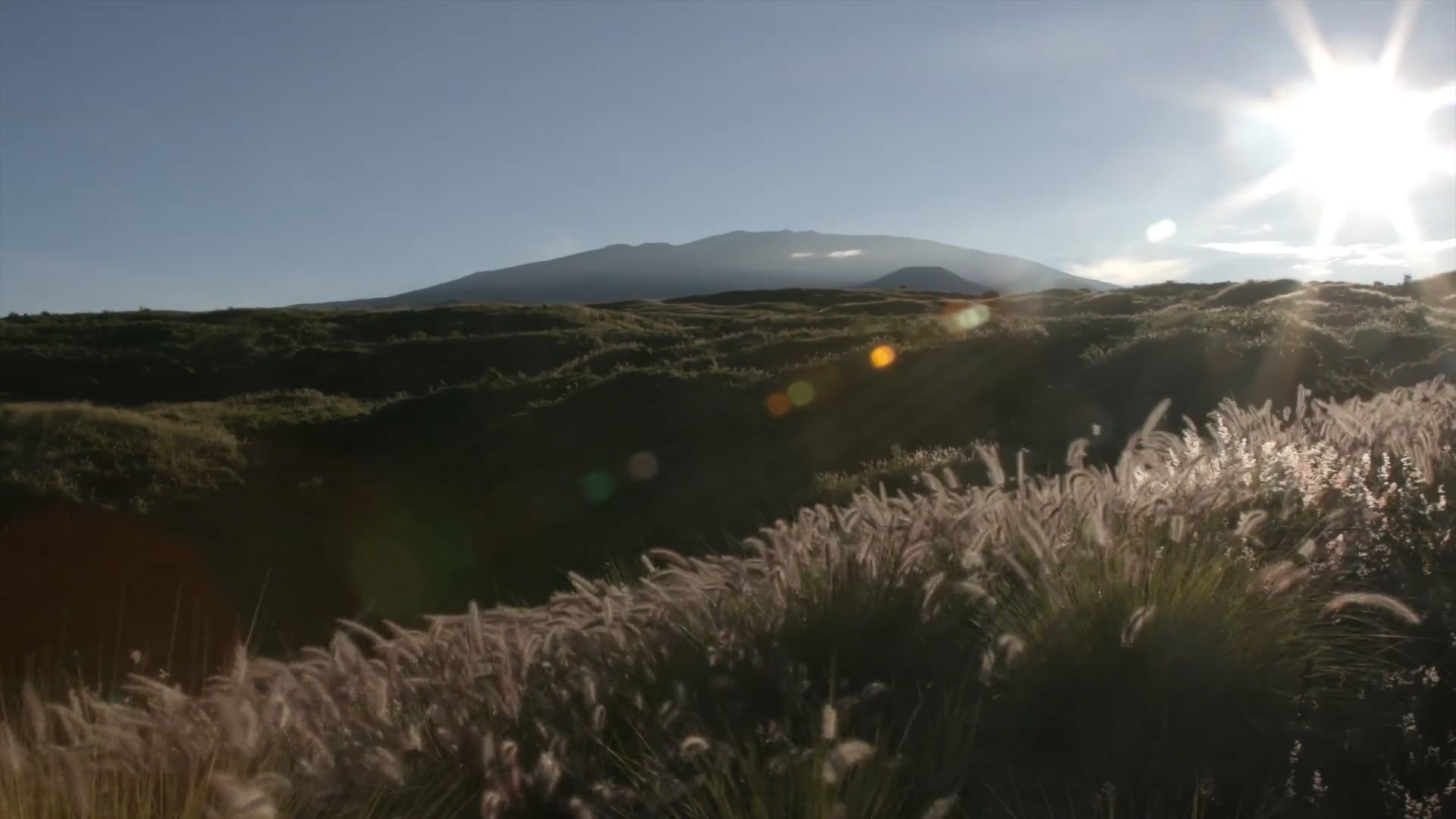
Let the Mountain Speak
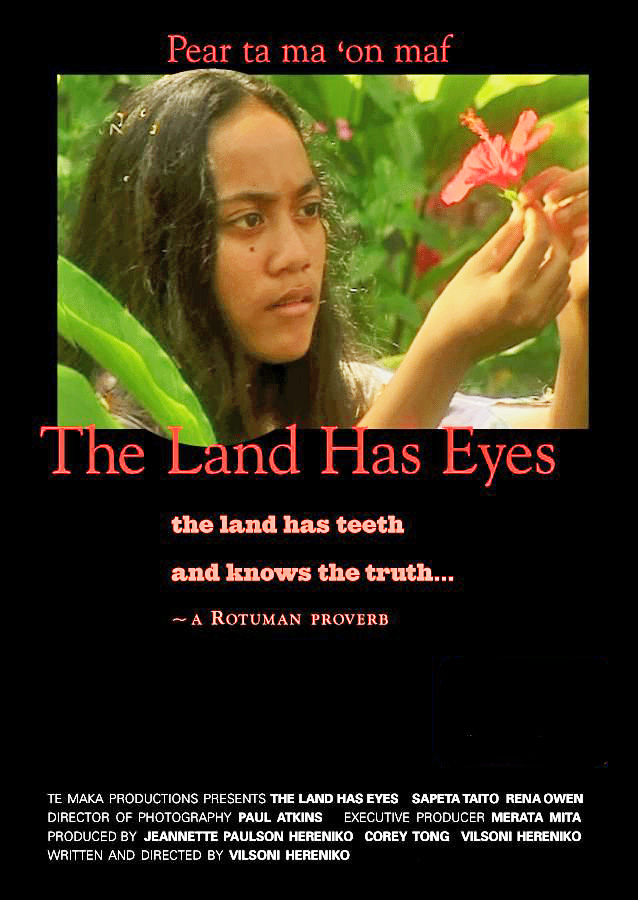
The Land Has Eyes
Let the Mountain Speak (5)
Did you ask me what I want? Or are you going to speak for me? I was here before you arrived, And I’ll be here today and tomorrow. Some say I have eyes and teeth, Others say I’m the perfect mountain, But have you asked me what I want? Lay down on the ground! Feel my truth Below your belly button, Then crawl on your hands and knees, Climb to the top of my summit Where I wait patiently for your arrival, To break you open. Now that you’re broken open, I will send you down, Embrace your mothers and your fathers, Your brothers and your sisters, Your aunties and your uncles, Your children, Even your children’s children, See enemies with new eyes, That’s when you’ll hear what I want. *(5) This text is the poem that appeared in Vilsoni Hereniko’s film Let the Mountain Speak.
The magic of cinema lies in its ability to recalibrate the energy fields between the screen and the viewer’s inner world. By guiding audiences into the unheard voice and sacred presence of Mauna Kea, Let the Mountain Speak becomes a conduit for practising vā. It transports the viewer into a call-and-response relationship with nature. This alludes to the Chinese idiom “Still waters run deep” (靜水深流), which describes an image of a serene, quiet lake. Beneath the calm surface, deep currents flow, navigating relational forces and meanings in subtle yet powerful ways. Conceivably, the vā is activated through aesthetically rich representations, constantly interflowing and consciously reinterpreted by the audience across time and space.
電影作為實踐 VĀ的容器
太平洋古老的信念視大地如人,它有「眼睛」,能看見;山脈亦有「牙齒」,能吐露眞相 (6)。這樣的宇宙觀在他的第一部劇情長片《土地有眼》(The Land Has Eyes)(7) 中得以呈現(該片也是太平洋地區第一部原住民語電影)。片中,羅圖馬島的女孩Viki 憑藉與土地的親密連結汲取力量,對抗腐敗官僚與殖民遺緒。她的堅韌源於傳說中的「戰士女神」與族群始祖的故事。 電影一方面透過羅圖馬人民、土地與在地語言喚醒集體記憶與原住文化根源;另一方面,影片亦作為再想像的載體,重構跨世代、跨文化,乃至跨地域的關係網絡。Vili 坦言Viki 其實正是他自己, 一個永遠在兩個世界掙扎的人――一邊是羅圖馬的傳統智慧與宇宙觀,另一邊則是西方教育與制度的價値體系。這種身分認同、自覺與歸屬感之間的張力,至今仍纏繞著他,在影片放映的當日,這樣的生命經驗與不少原住民觀眾產生深刻共鳴。 在此,電影不只是重述傳說或再現記憶,而是創造一種「延續性」:將過去與當下相連,並在不斷變化的語境和時空中,奏響新的可能性。
CINEMA AS VESSEL FOR PRACTISING VĀ
In the ancient beliefs of the Pacific, the land is regarded as a human being, with “eyes” that can see and mountains that possess teeth that can bite. (6) This view is illustrated in Vili’s feature film The Land Has Eyes. (7) The story follows Viki, a Rotuman school girl, who gains strength from her innate connection to the land to confront corrupt officials and colonial values. Her resilience is inspired by the legends of the “Warrior Woman” and the ancestral founders of her people. On one level, the film evokes collective memory and indigenous cultural roots through its portrayal of Rotuman life. It serves as a repository of knowledge, inviting viewers to nurture and protect the relationships across generations, communities, time, and boundaries. On another level, Vili has openly shared that Viki is, in many ways himself, someone who navigates two worlds: one grounded in Rotuman traditional wisdoms and beliefs, the other shaped by Western institutional values. This underlying tension of identity, self-determination, and belonging also resonated with many indigenous audiences at the film’s screening in Taitung. In this way, cinema does more than retell legends or reproduce memories. The Land Has Eyes becomes a gesture of remembrance that reclaims the past, and reawakens the vā, calling forth potential frames of reference that bind cultural traditions, rituals, and nature into unity. *(6) Vilsoni Hereniko, “Let the Mountain Speak: A Meditation on Mauna Kea,” Honolulu Civil Beat (2019), 2-3. *(7) The Land Has Eyes, written and directed by Vilsoni Hereniko (2004). The first feature-length film in the Pacific made in the Rotuman language. It premiered at the Sundance Film Festival in 2004, and was Rotuma’s official submission to the 2006 Academy Awards.
口述故事的延續
動畫《希娜與海神提尼勞》(Sina ma Tinirau)(8) 承襲羅圖馬的口述傳統,講述一位王子因貪婪而過度捕魚,被詛咒成為黑鰻魚,唯有贏得女子的愛方能重獲人身。最終,他化為一棵椰子樹,將身體獻給所愛之人。然而,故事並未以「從此過著幸福快樂的生活」作結;最後出現的軍艦鳥隱喻了超自然界依然主宰著萬物,提醒我們若不珍惜大自然所賜的一切,終將面對來自天地的回應與懲罰。透過這樣的結尾,Vili 揭示了人類與自然之間微妙而密不可分的關係。 在視覺上,這部以簡約線條構成的2D 動畫,彷彿是一場跨越時代、口口相傳的神話夢境。隨著「說故事人」的旁白響起,觀眾被悄然帶回童年時光,依偎在父母身旁,聆聽著睡前故事。在這裡,該部動畫成為了vā 的實踐場域,一個靈活轉化、持續更新說故事者與觀眾之間關係的容器。vā 的點燃讓記憶與情感在影像中流動,凝聚。
ORAL TRADITIONS AND CINEMATIC CONTINUITIES
The animated short film Sina ma Tinirau (8) is premised on Rotuman’s rich oral storytelling tradition. It tells the story of a prince cursed to become an eel for overfishing the lagoon, who can only regain his human form by winning a woman’s love. He later gifts his body to her in the form of a coconut tree. However, the story does not end with a conventional “happily ever after”; instead, the supernatural world prevails. The frigate bird at the film’s conclusion symbolises the lasting power of the unseen, reminding us that neglecting the gifts of nature carries consequences and demands accountability. Thus Vili illuminates the profound, inseparable relationship between humans and the natural world, portraying the land as sacred, as an ancestor deserving reverence. Visually, the film’s 2D animation, rendered in minimalist lines suggests a mythic dream passed down through generations. The storyteller’s voice, narrated by Vili, is reminiscent of listening to bedtime stories as a child and deepens personal interconnection. In Vili’s version of this classic tale, universal themes of greed, love, prejudice, conservation, and spiritual bond are recontextualised, layering the story with new meanings. The film offers a dynamic, contemporary framework that restores relations between ancestors and descendants, past and present, storyteller and audience. It urges for care to be extended to both the seen and unseen worlds that sustain and shape us. *(8) Sina ma Tinirau, written, directed, produced and narrated by Vilsoni Hereniko (2021). Sina and Tinirau are two mythological icons in Rotuman culture.
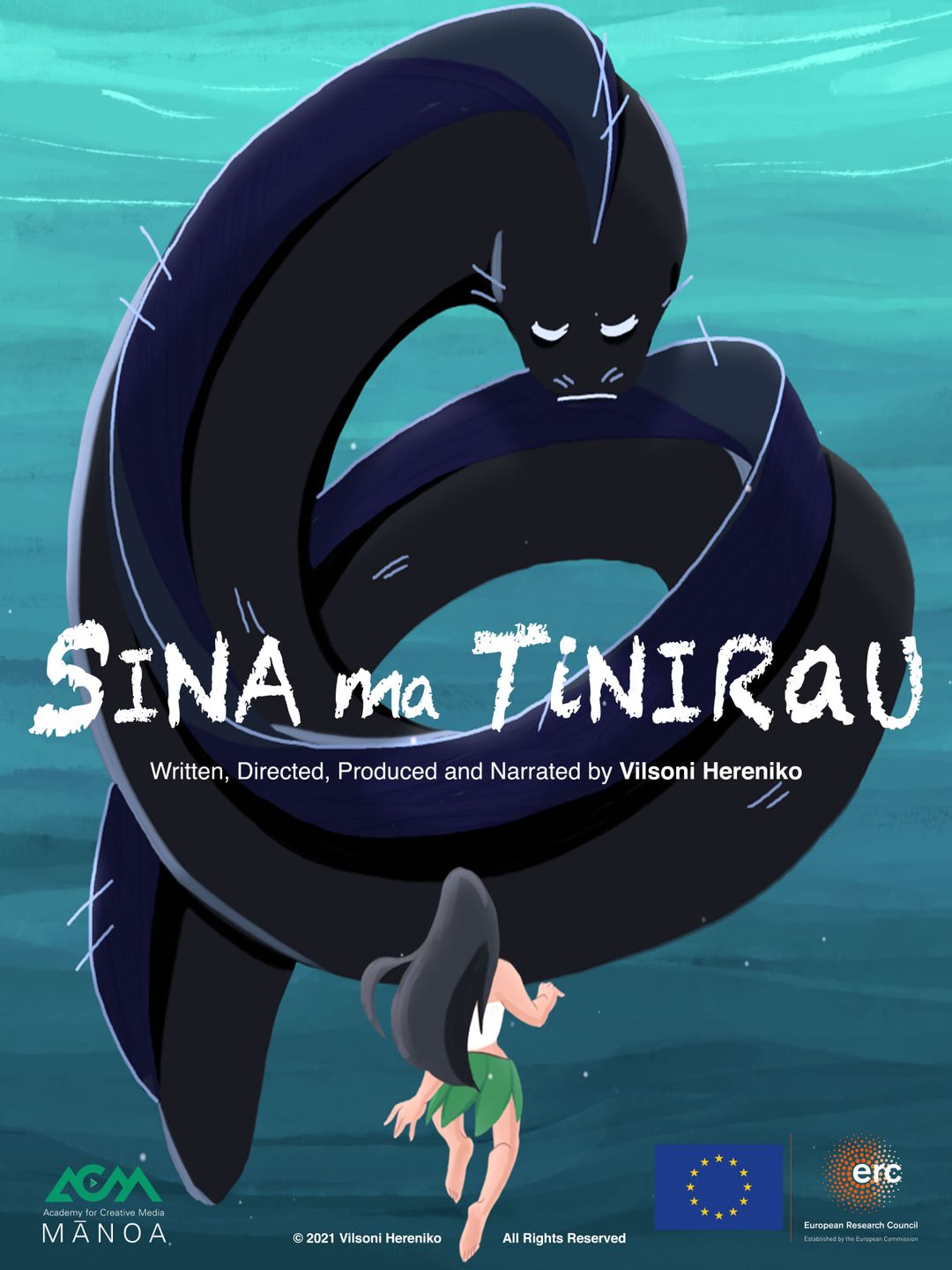
Sina ma Tinirau

Woven
椰子創生的連續體
Vili 出身於一個有11 個孩子的大家庭,從小因為家境貧困,椰子(9) 成為他最常吃的食物。在他的短片《編織》(Woven)(10) 中,他首次以演員身分出演,飾演一位原住民編織者, 在一座遺忘自身根源的城市里孤身編織著一只椰葉籃。 同時作為影片的導演和編劇,Vili 融入了鮮明的羅圖馬美學語彙:紅與黑象徵祖靈之境、藍色代表海洋,而綠色則藴含自然世界的生命力。更深層的意義,在於他對童年記憶的溯源、對文化傳承的堅持,並透過椰子樹的靈性象徵, 呈現出一種超現實的「呼喚與回應」幻境。在現實與回憶之間,迴盪著他與椰子互為一體的詩意回聲。 片中的一首詩〈NIU: 生命之樹〉反應出Vili 與椰子之間在精神與物質層面上的多重連結。對於他而言,椰子不僅承載著他在羅圖馬童年生活的印記,更是他與大自然持續對話的象徵;它同時也是他影像創作的靈感源泉。 〈NIU: 生命之樹〉 當我老了樹葉下垂 不要從我身邊擦過而不跟我打招呼 你喝了我,也吃我的肉 我的樹葉給了你庇護,記得嗎? 所以拿取我的一部分 讓我成為你的一部分 感受我,呵護我 像你從未做過的那樣 對我溫柔一點 也要有耐心 一起 你和我 我們將誕生NIU* 的創作 〈NIU: 生命之樹〉, Vilsoni Hereniko,邱瓈瑩譯 * niu 夏威夷語的椰子、椰子樹。在此,作者刻意以大寫字母強調,並與new 有諧音之意。
REIMAGINGING VĀ: CONTINUUM OF NIU CREATIONS
Vili grew up in Rotuman until the age of 16. Born into a large family where food was scarce, he formed a close relationship with coconut (niu), (9) which was a vital source of nourishment during his childhood. Since COVID-19, he has become a master weaver of coconut leaf baskets. His short film Woven, (10) based on a true story, revisits childhood memories of growing up in Rotuma; an island filled with coconut trees, and learning the art of weaving. In Woven,Vili makes his screen acting debut as an indigenous weaver, struggling to complete a coconut leaf basket in an urban city that has long forgotten its roots. As director and writer, Vili imbues the film with distinct Rotuman aesthetics: red and black to evoke the ancestral realm, blue to represent the ocean, and green to embody the vitality of the natural world. His act of weaving in the park by the Pacific Ocean, initiates an almost subliminal dialogue between the artist (Vili), with his past and present. The film opens with a montage of close-ups consisting of him washing fresh coconut fronds in the sea, followed by towering high-rise buildings. This sequence reveals not only his spiritual and material ties to the coconut tree, but also uproots the vā through magic realism – the relational space where continuity and nature’s calling are manifested. His perseverance to finish weaving the basket, despite being called “homeless” and forced by security guards into the rain, intensifies this tension. As one guard repeatedly said, “You can’t sit over here”, “Go to the park”, “You don’t belong here”. This exclusion is later subverted by a “real” homeless couple who appreciates the finished basket. In that moment, the audience is invited to reflect on displacement, identity, belonging, and rootedness. The vā becomes an autonomous tool for seeing with new eyes, reviving interpretations around the value of art and self-worth in an increasingly mediated world. *(9) Niu means coconut in a number of Pacific languages including Rotuman and Hawaiian. *(10) Woven, written, produced, directed by Vilsoni Hereniko (2024).
行走的VĀ:鏡外之境
鏡頭所捕捉的世界乃是現實的縮影――僅是世界的像素化片段,然而影像卻能點燃創作者與觀眾之間微妙的互動。vā――這個「關係引流」的隱喻,引領我們進入一種流動與關懷的模式,與土地、祖先、海洋以及彼此產生深層的共振。 Vili 電影作品中的許多含意,往往藏匿於縫隙與未見之處。透過視聴的體驗,我們得以親臨其境,在變幻的語境中開啟文化對話,編織新的連結。就像這一次透過他的「眼」和鏡頭,為我們展開了一場海與海之間、心連心所生成的探索之旅。
BETWEEN FRAMES, MOVING SOULS
The vā, the space between, is multi-dimensional and connects us all. It is a site of wholesomeness for us to care and nurture. Cinematic techniques make this visible, but more importantly, they make it felt by audiences. A film is never solely about the story it tells. It is also about what stirs in-between: the myriad ways it mobilises viewers into relation with themselves, each other, and the world around them. To trace the soul of Oceania through film is not to anchor it to particular image sequences, but to pursue the ways of seeing that open relational spaces. Much of the meaning in Vili’s films lies in the unseen gaps and beyond the frame, demonstrating the fluidity that emerges in cinematic experiences where the betweenness is full of breadth and depth. Through his “eyes” and lens, Vili takes the audience on an exploratory journey in which the vā is felt, imagined, and renewed.
本文機緣
Vilsoni Hereniko 於2025 年8月30日應臺東縣政府《海海臺東.南島誌》之邀,在國立臺灣史前文化博物館舉行的大師講座《太平洋的靈魂:從神話到出版、劇場、大銀幕》,內容包含影片放映及映後座談。放映作品包括其劇情長片《土地有眼》、動畫短片《希娜與海神提尼勞》、以及其它短片如《讓山脈訴說》、《編織》和《幻影》。
Context
In August 2025, Vilsoni Hereniko (hereafter ‘Vili’) visited Taiwan as part of the Hi Hi Taitung (海海臺東) publication initiative, supported by Taitung County's Cultural Affairs Department. The event featured curated screenings of his films along with a keynote presentation under the theme “The Soul of the Pacific: Tracing Myths through Lectures, Theatre, and Cinema”. This special feature is a reflection from Dana Huang, his interpreter during the trip, on Vili’s films and creative practices, which are shaped by his lifelong commitment to storytelling through his Rotuman culture and Oceanic perspectives. (You can access some of the films discussed in this article here: https://www.vilsonihereniko.com/)
〈靜 界〉
一首靈感源自《讓山脈訴說》的小詩 文| Dana Huang 霞光鑽進縫隙 雲沈釀成迷霧 靜默低吟 迴盪於記憶與片刻 緩緩煨煮著距離 聽 ―― 寂靜的流引 聽 ―― 你肌膚之下的故事 雖破碎 卻仍折疊著深意 雙眼懷念鹽的滲痕 齒間研磨著夢的餘味 齒縫之間 眞言未吐 腹部深處 繁念如潮 墜 落 滋生 一輪 又一輪 沿著我的脈搏 你散逸的足跡 向上 朝向我們共享的天地 過去傾身向前 當下起舞 影隨影而生 往下 你攜帶忐忑 編織已見與未見 纏連已知與未知 迴旋 解縫 綿延無際的靜默中 光在心與心之間 悄然流淌
Silent Space
A poetic response from Dana Huang, to the film Let the Mountain Speak. Light threads through my curled edges. Clouds brew into mists of silence. Stillness chants between memory and gaps, where distance dissolves. Listen. Silence moves. Listen to the stories under your skin, fractured, yet pulsating with meaning. My eyes itch with brined scratches, My teeth-grinding dreams humming between my teeth (something swells, an unspoken current). Deep in my belly — something sinks into vastness. Falling out — — growing in, again and again, along my veins, where your footprints scatter. UP toward the space we share. The past leans forward; the present zigzags, shadow before shadow. DOWN you bring your questions, braiding the seen and unseen, the known and unknown. Circling, unpacking, folding the silent space that stretches from heart to heart, where light breathes (in its own time).

掃描QR conde看更多Vilsoni Hereniko的作品/Watch more Vilsoni Hereniko's film works by scanning the QR code
正在發生的隱喻/A Metaphor Currently Unfolding:
《南島,以藝術之名》作者潘小雪專訪/Interview with Yuki Pan, Author of "Nan-taw: In the Name of Art"
文Writer|南美瑜 Mei Yu Nan 圖Photographer|林庭宇 Ting-Yu Lin、Makotaay Eco Art Village 翻譯Translator|加州翻譯社California Translations
原文出處|《海海臺東.南島誌》Vol. 4,2025年9月號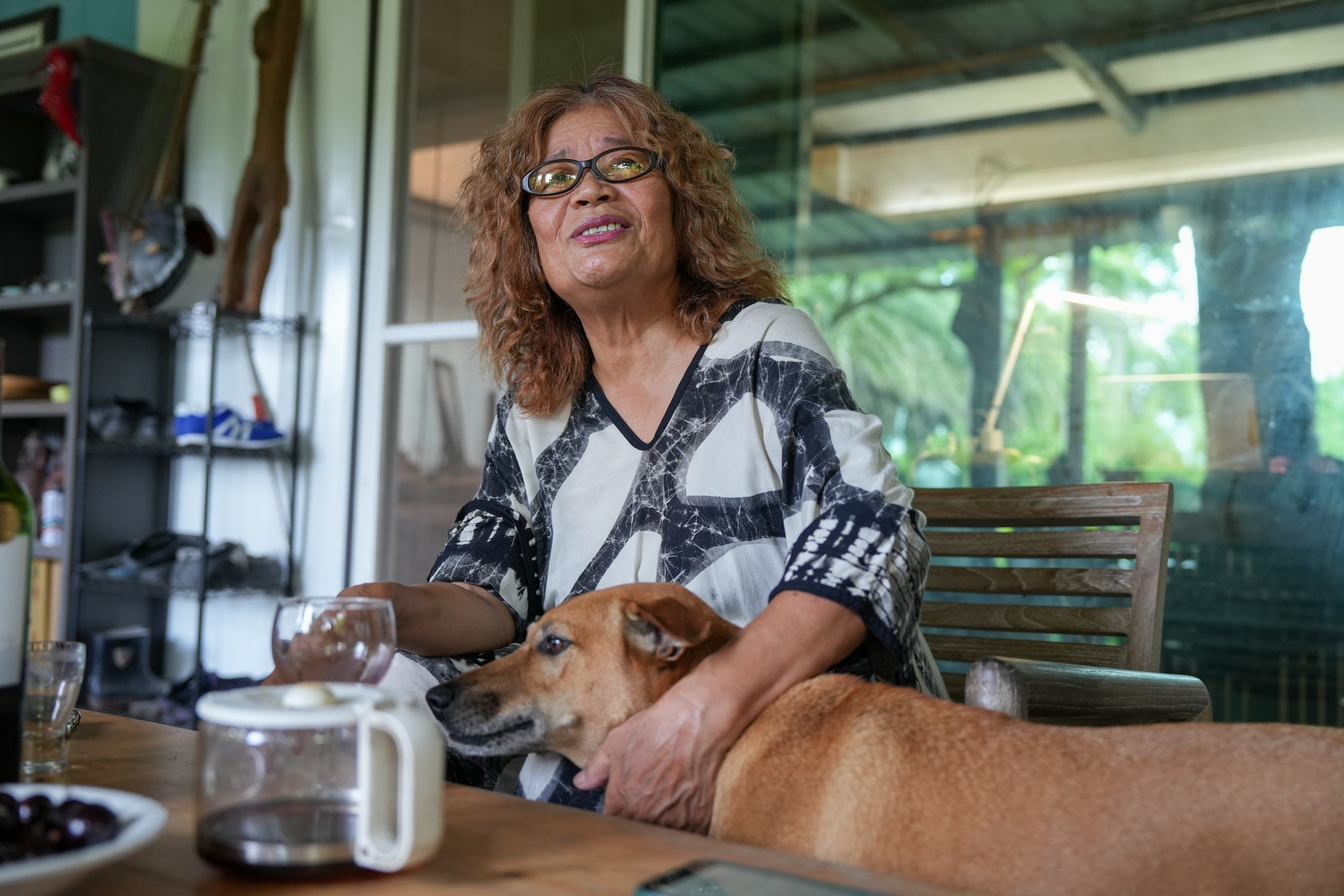
潘小雪Yuki Pan
前言/Introduction
《南島,以藝術之名Nan-taw: In the Name of Art》作者潘小雪,長年棲居於花蓮,她的身心靈故鄉。這段書寫交織著作者跨30餘年的時光、豐富的跨領域對話,除了如實呈現已經發生的、以及正在發生的南島藝術現象之外,她希望藉由書寫出臺灣原住民藝術創作的本質與藝術主流大不相同之處,用以沉思藝術......。 Author of "Nan-taw: In the Name of Art" Yuki Pan has lived for years in Hualien, the home of her body, mind, and spirit. The book spans over 30 years of her life and the rich cross-disciplinary dialogue that took place over that period. Apart from faithfully presenting Austronesian artistic phenomena that have already occurred and are currently unfolding, she wants her writing to relate the major differences between the nature of Taiwanese Indigenous people’s art and mainstream art as a means of pondering art….
南島美感拓樸/A topology of Austronesian aesthetic
1990年代的臺灣,為了突破政治困境,引發各領域的積極行動;學術界針對太平洋、大洋洲、南島語族領域進行深入探討。出身美術學院、畢生研究美學與哲學的她,了解到關於起源理論的探討,例如以語言學、人類學探討南島起源時,如果過於強調單一原鄉、線性史觀,必然會面臨二律背反、悖論不完的惡性循環。而藝術主流已開始走入過度形式主義的僵局,所以當「南島藝術」成為政策、策展題目或論述時,也會出現同樣的定義問題。 In the 1990s, to find relief from Taiwan’s political predicament and trigger action by people in various sectors, academia began conducting in-depth research on the Pacific Ocean, Oceania, and the realm of Austronesian-speaking peoples. Having graduated from a school of fine arts and devoted her life to the study of aesthetics and philosophy, Pan gained insight into the exploration of origin theories. For instance, while probing the origins of the Austronesian-speaking peoples through the fields of linguistics and anthropology, she found that if too much emphasis is placed on a single homeland or if a linear view of history is taken, one will inevitably be faced with a vicious cycle of contradictions and paradoxes. Mainstream art embarked on a deadlock of excessive formalism, so when Austronesian art became a government policy, curatorial theme, and topic of discourse, the same problem of definition emerged.
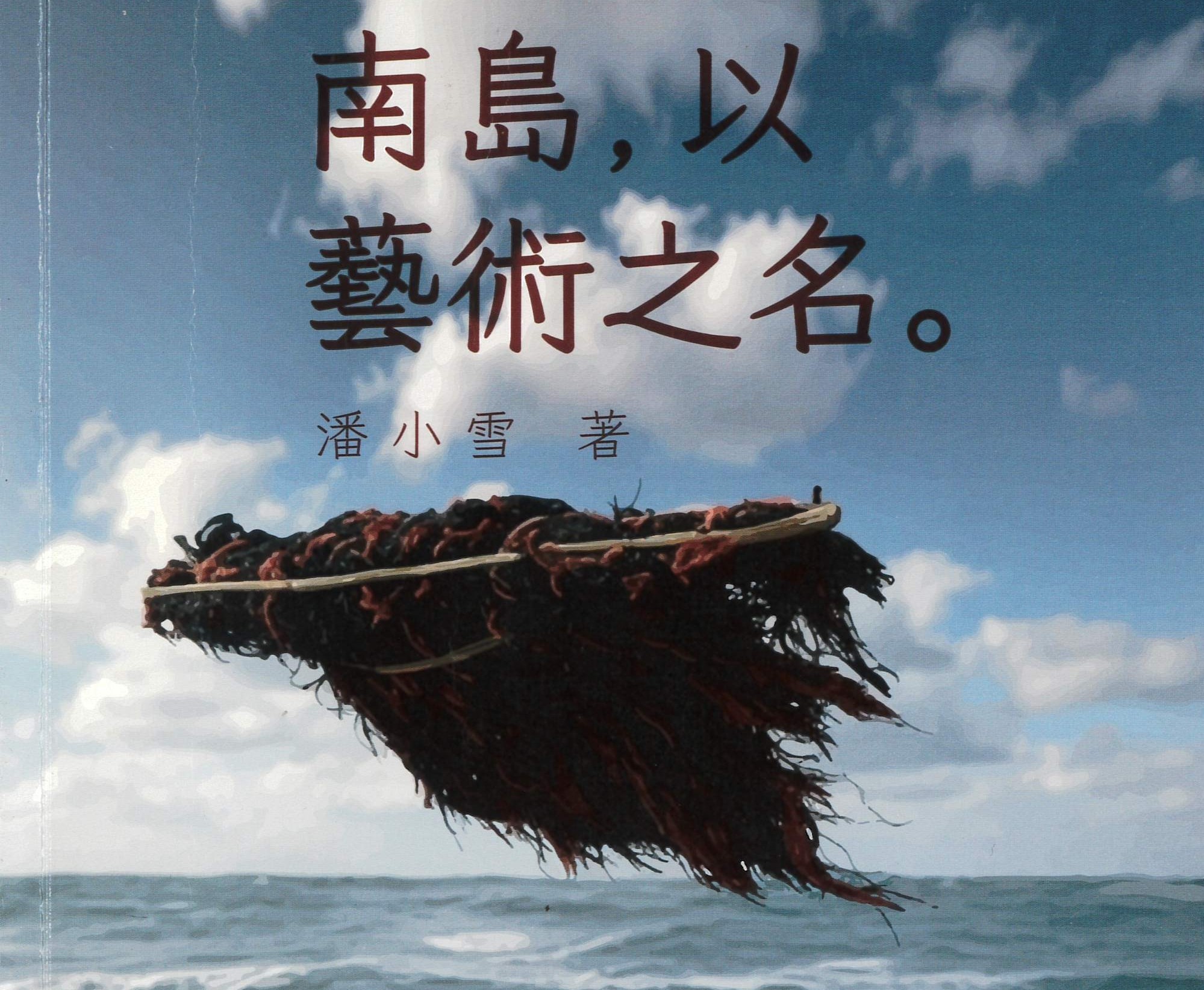
《南島,以藝術之名》,潘小雪著,臺東縣政府、臺東美術館出版,允晨文化發行。
但南島一詞並非藝術生態所形成的觀念,潘小雪的書寫也不在於提出新的主義,而是用貌似「講東講西」的姿態詮釋這個正在發生中的、貫穿時空的、靈與人的「流形」空間,想像一個以藝術為名的南島美感拓樸(Topology)。誠如人類學者林浩立所言,「撬開文化觀念的槓桿是關於書寫與拼貼的延伸概念,前者被認為互動性、開放性與過程性;而後者則是要為異質性提供空間,不僅是為美學並置,更是為歷史並置和政治並置提供空間。」(注) But the word “Austronesian” did not come from the art ecosystem, and Pan’s writing is not about proposing another -ism; rather, she has interpreted this unfolding, across-time-and-space, spiritual-and-human “manifold” space in a “rambling” manner so as to come up with a topology of Austronesian aesthetic in the name of art. Anthropologist Lin Hao-li was spot-on: “The lever for prying open cultural concepts lies in the extended notions of writing and collage: the former is understood as interactive, open, and process-oriented; the latter seeks to provide space for heterogeneity for not merely aesthetic juxtaposition but also historical and political juxtaposition.”* 注|報導者「Boom・磅」講座:林浩立「南島—太平洋是21世紀最繽紛迷人的『成為原住民』路徑」),陳怡靜記錄,2024年12月。 * From The Reporter. Chen Yi-ching. December 2024. Boom: Lin Hao-li: “The Austronesian–Pacific Region Is the Most Vibrant and Fascinating ‘Path to Becoming Indigenous’ in the 21st Century.” (Article published in Mandarin only.)
重回部落找回原初/Returning to Indigenous communities to rediscover primality
事實上,許多臺灣原住民藝術家並未用南島為概念去創作,「他們在傳統與現代之間復返與拓展,為臺灣創作新的藝術知識(或返回藝術的本源找到真實),他們的態度是自由面對的。」不少學院出身的創作者卻常陷入技術訓練的養成所形成的侷限,「要丟掉往往得花一輩子的時間。」潘小雪說。 In fact, many Taiwanese Indigenous artists make art unrelated to Austronesian issues. Pan says, “They oscillate between the traditional and the modern, reclaiming and extending it, creating new artistic knowledge (or returning to the origins of art to find truth) in Taiwan. They do so freely.” Many artists from art schools often fall victim to limits that form as a result of technical training. “It often takes a lifetime to break free.” 藝術家該如何得到解脫與救贖?幸而長年在教育現場的她,往往是從不被主流價值認同的、被視為「問題學生」的年輕人身上,看見了不受框架限制、天馬行空的創造力與想像力,繼而得到啟發。而更重要的是進入部落學習,這是她成長中缺席的一塊,但在銅門國小前校長陳明珠等友人的引領下,參加多次部落的祭儀活動,尤其是花蓮Makotaay港口部落豐年祭,熟稔原住民文化的陳明珠以現代語言為她剖析深度的內涵;也常遇見從都市返鄉,投入部落事物、復振文化如拉黑子等原住民創作者們,讓她目睹「藝術正在發生的那個當下、那個現場」。 So how do artists liberate themselves? Fortunately, she has spent years in the education realm, and it is usually from young people who are not recognized by mainstream values and who are labeled “problem students” that she sees creativity and imagination unbounded by conventional frameworks and is thus inspired. More important is learning in Indigenous communities, which is something she missed out on while growing up. But with the guidance of Chen Ming-chu (the former principal of Tongmen Elementary School) and other friends, she attended several ceremonial events in local Indigenous communities. At the harvest festival in the Makotaay community, Chen, who is well-versed in Indigenous culture, explained to her in readily understood language the profound things that were happening. Also, such artists as Rahic Talif, who return to and invest themselves in their home communities and work to revitalize local culture after having lived away in cities, have shown her “art as it is happening and where it is happening.”
當代藝術半路遇到原住民/Contemporary art meets Indigenous art
2002年初春,臺東有一群藝術家在金樽沙灘紮營長達三個月,他們分別來自花東各部落、也有白人與白浪(漢人),沒水沒電、就地取材造屋、創作、辦展覽,自稱「意識部落」。至今,這股回歸原初的創作能量依然深深影響著東海岸的藝術發展。而潘小雪則從2003年開始,策劃主辦洄瀾國際藝術家創作營,其後十年之間持續和世界各地藝術村合作,在花蓮各個重要歷史空間以及部落舉辦創作營,總共邀集32個國家(遠及聖彼得堡、布宜諾斯艾利斯、開羅、亞美尼亞、南非等)72位藝術家與73位臺灣藝術家參與,「用極少的經費在現實中建構一個藝術烏托邦。」 In early spring 2002, a group of artists from Indigenous communities on the east coast as well as some of Han-Chinese descent and from abroad camped at the Jinzun beach in Taitung for three months. Without running water or electricity, they built structures, made art, and put on an exhibition, all using local materials. They called the camp the “Open Circle Tribe.” That surge of creative energy making a return to primality is still influencing art along the east coast. In 2003, Pan started curating the Hweilan International Artists Workshop and, over the following decade, worked with art villages around the world while holding art workshops at major historical spots and Indigenous communities in Hualien. During that time, she brought together 72 artists from 32 nations (including places as far away as St. Petersburg, Buenos Aires, Cairo, Armenia, and South Africa) and 73 Taiwanese artists, “building an artistic utopia with minimal funding.” 在駐村期間,國外藝術家們尤其喜歡跟原住民在一起聊天、工作,白日裡,在鏈鋸聲、收音機音樂聲、笑聲不斷的氛圍中開始一天的工作。原住民創作者流暢地操作電鋸、綁鐵線、釘釘槍、鎖螺絲等勞動本領,與熱心地幫助分享的個性,讓國外藝術家既讚嘆又感動。夜裏,在工寮、沙灘各式場域的創作論壇中,原民藝術家分享著如何為捍衛文化與土地而創作,生命處境與生活經驗內化而成的身體感反映在作品上的能量。 During the workshops, the overseas artists were particularly fond of chatting and working with the Indigenous artists. During the daytime, the sounds of chainsaws, radios, and continual laughter filled the atmosphere. Indigenous artists, highly adept in their use of tools, were more than willing to help their foreign counterparts, leaving the latter both impressed and moved. At night, during forums held in work sheds and at the beach, Indigenous artists shared about how they create art to safeguard their culture and land, and the feelings—shaped by their life circumstances and experiences—that manifest as energy in their work. 曾有一位巴勒斯坦藝術家在聽完分享後,淚流滿面地問,「為什麼有人可以這麼愛自己的族群、靈魂和土地?」這位藝術家從小在異地受教育、定居海外,他從不知道要跟哪一塊土地結合。潘小雪看得出原民藝術帶給其他藝術家的衝擊,「他們知道這裡面(部落)有好東西!」「而他們(原住民)一直在進行的是藝術『在發生時』的那個狀況,他們體現的是藝術創作的原初性。」是這麼充滿原始的生命力與強度!當主流社會的當代藝術想要回溯藝術的原初性時,「他們在半路碰到原住民藝術,而帶來了啟發。」 After hearing an Indigenous artist share, a Palestinian asked in tears, “How can someone love their people, soul, and land so much?” The Palestinian had been raised and educated outside of Palestine and did not know which land he should connect with. Pan saw the impact Indigenous art produces on other artists: “They know there’s good stuff in Indigenous communities! And the art Indigenous people create is that which is in the very moment of its occurrence. They manifest the primality of art.” Indigenous art is imbued with so much primal energy and power! As mainstream contemporary artists were looking to make a return to primality, “they happened upon Indigenous art, which is generating new inspiration.”
當代藝術是全人類性的/Contemporary art is for all of humanity
「當代藝術(contemporary art)是在談正在發生的事,是很即時性的,暫時是用這樣的創作議題來解釋、批判,許多議題更是屬於全人類性的。」「所以人人都可能作為當代藝術家,這也是即使沒有受過藝術教育的原住民創作者自然產生的原因。」潘小雪說。 “Contemporary art is about what is happening now. It is immediate. It interprets and critiques, and many of the issues it deals with are of universal significance. So anyone can be a contemporary artist. That’s why Indigenous people without any art education background have naturally become artists,” Pan says. 前高雄市立美術館館長李俊賢(1957-2019)於2006年率先提出「南島藝術」這個觀念與詞彙,是最早提出「重啟臺灣原住民當代藝術與南島語族當代藝術之連結」的藝術機構首長與藝術家。由他主導與串連全球的大型國際展覽中,在交流、立論非常豐富而有深度,如2007年舉辦的「超越時光.跨越大洋——南島當代藝術」大展 ( Across Ocean and Time—Art in the Comtemporary Pacific ),李俊賢與協同策展人艾曼紐・卡薩耶胡(Emmanuel Kasarhérou)的論述奠定南島藝術的思想內容主要有三方面:一、大洋洲、太平洋、南島語族諸島是海上人類文明的基地。二、關係連結新力量。三、當代藝術是全人類互動的方法。 Kaohsiung Museum of Fine Arts director Li Chun-hsien (1957-2019) coined the term “Austronesian art” in 2006 and was the first head of an art organization and the first artist to propose “reinitiating the connection between contemporary Indigenous Taiwanese art and contemporary Austronesian art.” During large international exhibitions guided by him that connected different parts of the world, the exchanges and discourse that took place were enriching and profound. For instance, during the 2007 exhibition Across Ocean and Time—Art in the Contemporary Pacific, Li and co-curator Emmanuel Kasarhérou established that the idea of Austronesian art has three main aspects: 1) Oceania, the Pacific, and the islands inhabited by Austronesian-speaking peoples were a collective cradle of maritime human civilization, 2) new power in building connections, and 3) contemporary art as a means of interaction for all of humanity. 2024年,威尼斯雙年展金獅獎最佳國家館由澳洲館獲得,主題展「最佳藝術家獎」則由紐西蘭的Mataaho Collective獲得,兩者皆是原住民藝術家及其創作。潘小雪認為,這正說明了過去以西方為主流的藝術世界「有待靠原住民藝術來『解救』。」 In 2024, the Venice Biennale Golden Lion for Best National Participation went to Australia, and that for Best Participant in the International Exhibition went to New Zealand’s Mataaho Collective, both of which were groups of Indigenous artists. Pan believes that the art world, which has long been dominated by the West, “is to be ‘saved’ by Indigenous art.”
2023年Makotaay生態藝術村開幕石梯漁港Mihoyo現場,潘小雪(右)說自己已是ina(Pangcah語為母親、阿姨)的身分了。
當隱喻正在發生/When a metaphor is unfolding
此書的英文書名南島二字並未採取語言學所使用的Austronesia,而是以Nan-taw稱之,潘小雪企圖用藝術來探討南島其他意義的可能性,尤其是她從人類學者童元昭自艾培立・浩鷗法(Epeli Hau'ofa 1939-2009)的「我們是海洋」觀點,以其延伸思想「南島是一個隱喻(metaphor)」這個創造性的角度所帶來的啟發。既然是隱喻,便能擺脫掉理論讓人悖論不完的死胡同;當南島成為一個隱喻,也說明了它在審美上的無限可能性。 In the English name of this book, the transliteration “Nan-taw” was chosen in place of the common linguistic term “Austronesia.” Pan is attempting to find other possibilities for the meaning of “Austronesia,” an endeavor especially inspired by anthropologist Tung Yuan-chao, whom Pan once heard give a presentation that mentioned Epeli Hau'ofa’s (1939-2009) concept that “we are the ocean” and introduced a creative extension of that: the idea that “Austronesia is a metaphor,” and since it is a metaphor, it frees us from theoretical dead ends that trap people in endless paradoxes. As a metaphor, it has unlimited possibilities in the realm of aesthetics.
原住民有一個字叫自來手,概念與pulima(巧手之人)類似,「其實就是我們上輩子做過的承諾,因為在生命最終的時刻,想要做卻無法進行的那件事,所以承諾下輩子一定要去做。」「所以我們的手是被帶著走的。」她右手拿畫筆、左手寫評論;曾任美術館館長、藝術學院院長、多次成為公民倡議與運動的前鋒;在籃球場上,她是擅長逆轉勝的中鋒,在創作與書寫中她也擁有那雙靈性的手。 The term “makisa ljanga” is from a Taiwanese Indigenous language and refers to a concept similar to that of another Indigenous concept: pulima (“one with a skilled hand”). Pan explains, “It’s a commitment made by generations past. At the end of one’s life, when there’s something they want to do but can’t, they commit to doing it in the next life. So our hands are brought with us into the next life.” With a paint brush in her right hand and a pen for writing critiques in her left, she has worked as an art museum director and dean of an art school and has been on the front lines of numerous public initiatives and movements. On the basketball court, she is a center who excels at turning the game around. And in art and writing, her hands are spirit-filled. 「從小到大,有規則的比賽,我一定會贏。」像人生中一場場的籃球賽、考試、寫升等論文的無往不利。但當直球對決於政治與現實社會的公民運動中時,她卻因看不到「規則」的存在偶而敗陣。「我其實想要透過實際參與來做自我客觀化的省思:『你到底了解這個世界、涉入現實有多深?』只是因為觀念、閱讀、媒體,就成爲參與(公民運動)的原因嗎?我想了解為什麼會這樣?」 “I’ve always won at games with rules ever since I was little.” She has enjoyed much success in so many of her undertakings: basketball, tests, and papers for promotions. But when it comes to direct confrontation in social movements within politics and real-world society, where the rules are vague, she sometimes loses. “I want to be involved in person as a way to reflect on myself objectively in asking, ‘Do I truly grasp the world? How deeply am I engaged with reality?’ Do I get involved in social movements just because of viewpoints, things I’ve read, or the media? I want to know what is going on in that aspect.” 老人家說,要有智慧回眸人生,專注在那個思想裡面,你就是「被揀選的」、帶著自來手的人。如果自來手是一個隱喻,它說明了藝術創作者一生的創作自覺。而她總是全神貫注投入於藝術和社會的熱情與勇氣,像是在回應那份亙古的承諾。文如其人,她將此書「獻給在這片土地上努力創作的藝術家」。 Those of the older generation say that you need to look back on life and focus on the related wisdom. If you do, you become one of the “chosen” and are gifted with makisa ljanga. As a metaphor, makisa ljanga tells of the creative consciousness of an artist. Pan, brimming with passion and courage, is fully focused on art and society, as if responding to that ancient commitment. One’s writing is a reflection of oneself. She dedicates this book “to the artists who strive to create in this land.”
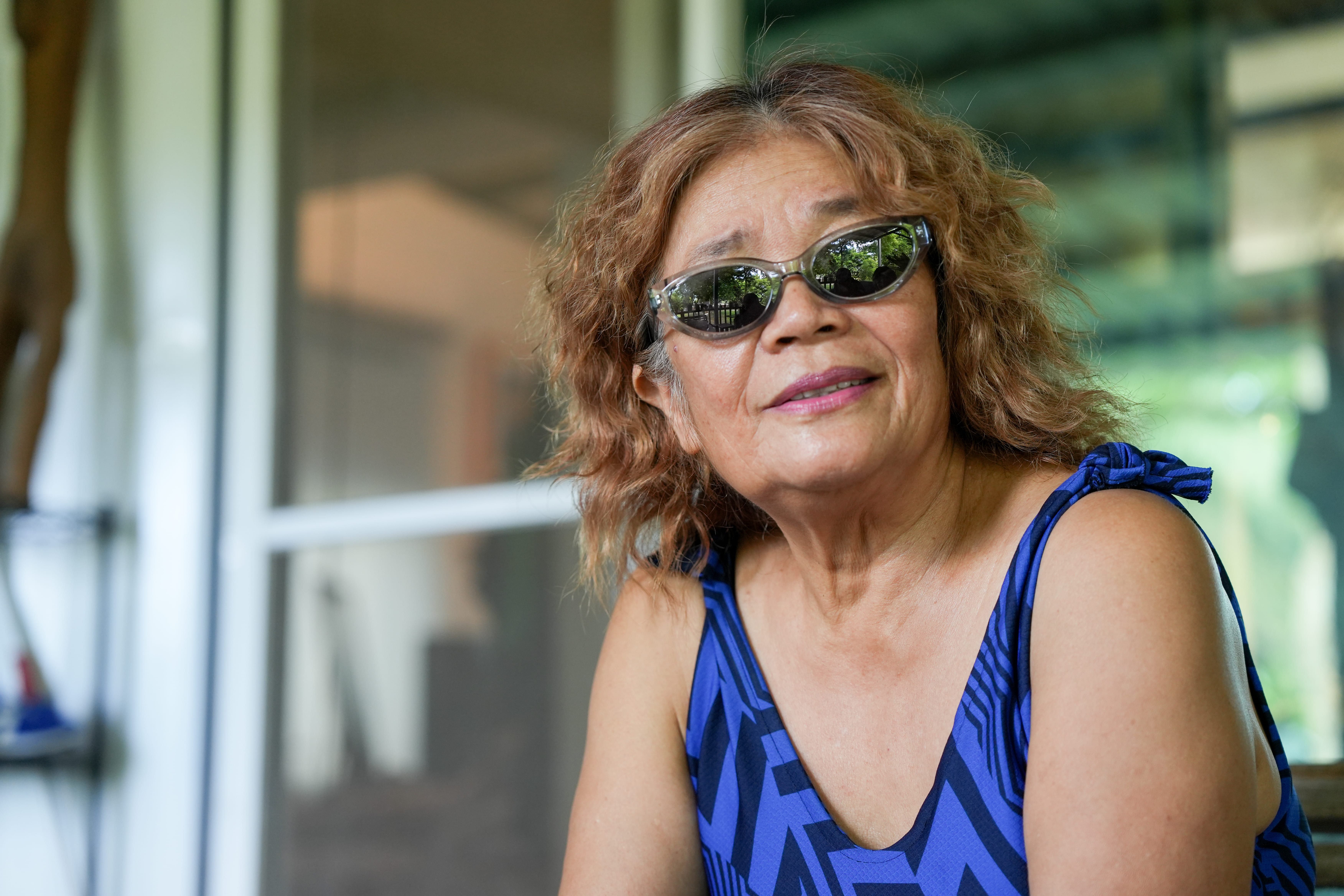
潘小雪/Yuki Pan
藝術創作、藝術教育、美學研究、臺灣原住民藝術研究。曾任國立東華大學藝術學院院長、台北當代藝術館館長,參與或開創臺灣解嚴後的各項文化政策與藝術運動。早年曾在英國、德國駐村展出、亞美尼雅雙年展、台灣美術雙年展以及七個個展等。曾於比利時新魯汶大學哲學院研究梅洛龐帝美學,啟發個人在原住民藝術的美學研究,由此提供疲敝的人心予野性的思維,恢復生命力。 Artist, art educator, and researcher of aesthetics and Taiwanese Indigenous art. Dean of National Dong Hwa University College of the Arts, Director of MoCA Taipei, participant in or initiator of various cultural policy and artistic movements in Taiwan after the lifting of martial law. Artist residencies and exhibitions in the UK and Germany, International Biennale of Contemporary Art Gyumri Armenia Armenia, the Taiwan Biennial, and seven solo exhibitions. Studied Merleau-Ponty’s aesthetics at the Université Catholique de Louvain in Belgium, which inspired her to conduct research on Indigenous art aesthetics, which in turn restored her vitality by providing her weary heart with a wild, untamed mode of thinking. 原文出處|《海海臺東.南島誌》Vol. 4,2025年9月號